
Female Chihuahuas typically go into heat for the first time between 4 and 7 months of age. The cycle repeats every 4-6 months, lasts 2-4 weeks, and has 4 stages. Signs include vulva swelling, bloody discharge, restlessness, and increased urination.
The Chihuahua heat cycle begins earlier than most owners expect, sometimes as young as 4 months old. Without understanding the 4 stages, the behavioral and physical changes can be alarming. This guide covers exactly what happens, when, and how to manage it.
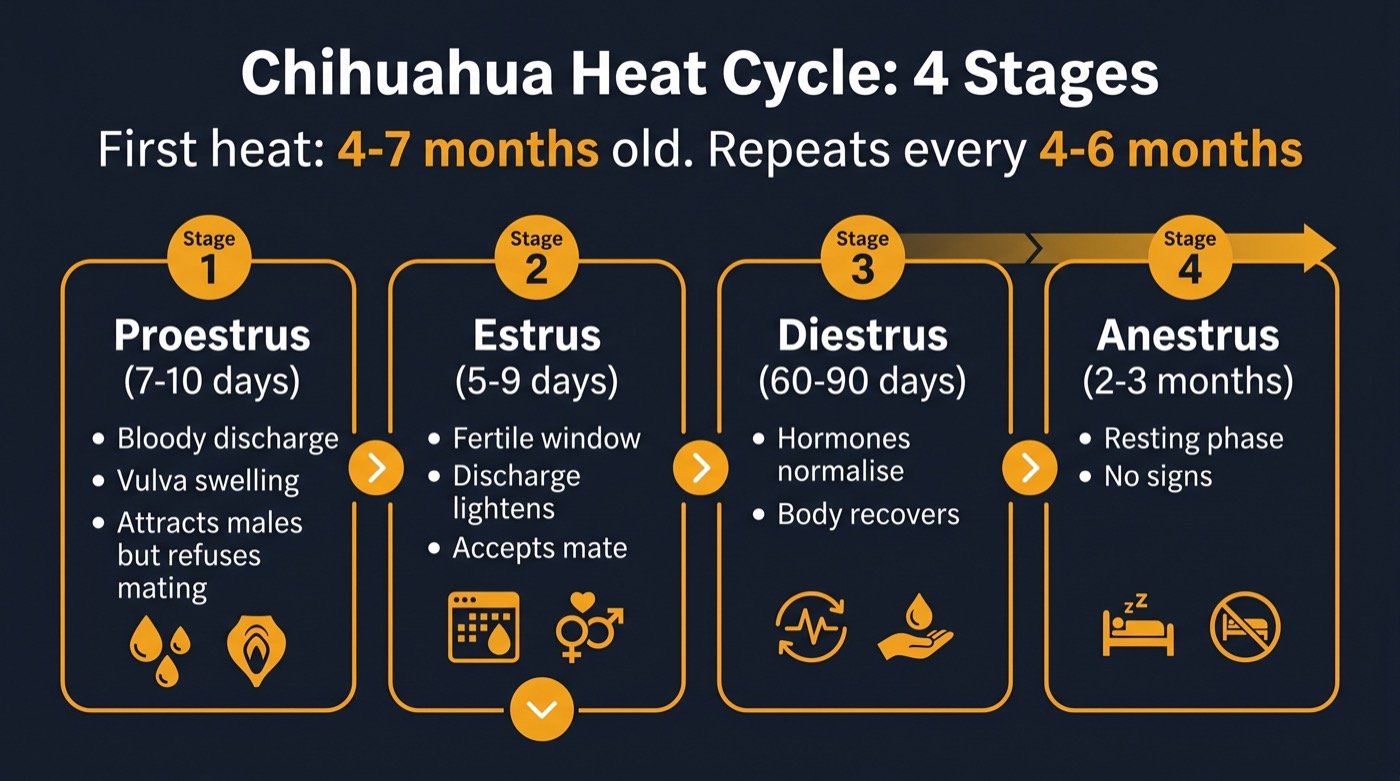
In short, the Chihuahua heat cycle occurs every 6 to 9 months, lasts approximately 21 to 28 days, and is divided into four distinct stages. Most Chihuahuas experience their first heat between 6 months and 1.5 years of age, though toy breeds can cycle as early as 4 to 5 months.
Whether you are a first-time Chihuahua owner navigating unexpected behaviors, considering spaying, or trying to plan a responsible breeding program, this guide covers everything you need to know, with insights from veterinary experts and breed-specific details that most generic dog articles miss.
The Chihuahua Heat Cycle: Key Timing and Frequency
Chihuahuas are one of the earliest-maturing dog breeds when it comes to reproductive cycles. According to the American Kennel Club, toy breeds like Chihuahuas can experience their first heat as early as 4 to 5 months of age, well before many medium or large breeds reach sexual maturity.
Orthopedic Self-Warming Dog Bed for Small Breeds
Chihuahuas sleep up to 14 hours a day. A raised, thermal-lined bed keeps them warm without drafts from cold floors.
After that first cycle, most Chihuahuas settle into a rhythm of every 6 to 9 months. However, individual variation is common. Factors like body weight, overall health, stress levels, and genetics all influence how frequently your dog cycles. Do not assume a predictable 6-month calendar without tracking your specific dog’s pattern.
One important fact many owners overlook: Chihuahuas do not stop cycling with age. Unlike humans, dogs have no menopause. An unspayed Chihuahua will continue going into heat throughout her entire life, though cycles may become more irregular as she gets older.
How Long Does Each Heat Cycle Last?
A complete heat cycle in a Chihuahua typically lasts 21 to 28 days from start to finish. Some sources cite a shorter range of 2 to 3 weeks for the active bleeding phase specifically, which is just one part of the full cycle. Understanding the difference between the overall cycle and each individual stage helps you track your dog’s fertility window more accurately.
The 4 Stages of the Chihuahua Heat Cycle Explained
The heat cycle is not one continuous event. It is divided into four distinct stages, each with its own hormonal profile, physical signs, and behavioral changes. Knowing each stage helps you respond appropriately and keep your Chihuahua safe.
Stage 1: Proestrus (Days 1 to 9)
Proestrus is the opening stage of the cycle and lasts an average of 9 days. This is when you will first notice visible signs: the vulva begins to swell noticeably, and a bloody or rust-colored vaginal discharge appears. Your Chihuahua may urinate more frequently than usual, which is actually her way of spreading pheromones to attract males.
Despite attracting male attention, your Chihuahua is not yet fertile during proestrus. She will likely reject any advances from males during this phase. Behavioral changes are common, including clinginess, restlessness, or mild aggression.
Stage 2: Estrus (Days 10 to 18)
Estrus is the fertile window and typically lasts another 9 days on average. The discharge shifts from bloody to a lighter, watery, or straw-colored appearance. Your Chihuahua will now actively seek male attention, often displaying tail flagging (moving her tail to one side to signal receptiveness).
The actual ovulation window is narrow: fertility peaks from approximately 2 days before to 5 days after ovulation. If you are trying to prevent an accidental pregnancy, this entire estrus phase must be treated with extreme caution. If you are planning a breeding, understanding when to breed a Chihuahua becomes crucial, and a veterinarian can confirm ovulation timing through blood progesterone testing.
Stage 3: Diestrus (Days 19 to 78)
Diestrus follows estrus and lasts roughly 60 days, regardless of whether your Chihuahua became pregnant. During this phase, progesterone levels remain elevated, which means an unspayed, non-pregnant Chihuahua may experience a false pregnancy (pseudopregnancy). Signs include nesting behavior, mammary gland enlargement, and even producing milk.
False pregnancies can be distressing for both dog and owner. If your Chihuahua shows significant signs of pseudopregnancy, a veterinary consultation is recommended to rule out complications and discuss management options.
Stage 4: Anestrus (The Rest Period)
Anestrus is the quiet phase between cycles, lasting approximately 4 to 6 months. The reproductive system is essentially at rest, hormone levels are low, and there are no visible signs of heat. This is the period that accounts for the 6-to-9-month gap between cycles.
Chihuahua Heat Cycle: Stage-by-Stage Comparison
| Stage | Average Duration | Key Signs | Fertile? |
|---|---|---|---|
| Proestrus | ~9 days | Vulvar swelling, bloody discharge, frequent urination | No |
| Estrus | ~9 days | Watery discharge, tail flagging, receptive to males | Yes |
| Diestrus | ~60 days | Hormone-driven calm, possible false pregnancy | No |
| Anestrus | 4 to 6 months | No visible signs, reproductive rest | No |
How to Recognize the Signs Your Chihuahua Is in Heat
Catching the early signs of heat helps you act quickly to prevent accidental breeding and keep your Chihuahua comfortable. Here are the most common signs to watch for:
- Swollen vulva: Often the very first physical sign, noticeable even before discharge begins
- Vaginal discharge: Starts bloody or rust-colored, transitions to watery or pinkish during the fertile window
- Frequent urination: More bathroom trips than usual, especially in unfamiliar spots outside
- Tail flagging: Your Chihuahua moves her tail to one side when touched near the hindquarters
- Behavioral changes: Increased affection, restlessness, or uncharacteristic aggression
- Appetite shifts: Some Chihuahuas eat less during early heat; others show increased appetite
- Attracting male dogs: Even neutered males may show unusual interest during proestrus and estrus
What Is a Silent Heat in Chihuahuas?
A silent heat is a cycle where the dog ovulates normally but shows minimal or no outward signs. This is more common in young Chihuahuas during their first one or two cycles, when hormone levels may not yet be high enough to produce obvious symptoms. Cornell University’s College of Veterinary Medicine notes that silent or split first heats can occur in toy breeds, making early monitoring especially important.
If you suspect your Chihuahua had a silent heat, a veterinarian can confirm it through blood work measuring progesterone levels. Do not assume no visible signs means no heat occurred.
How to Manage Your Chihuahua During Her Heat Cycle
Managing a Chihuahua in heat requires attention to hygiene, safety, and your dog’s emotional needs. Follow these steps to navigate the cycle smoothly:
- Use doggy diapers or sanitary pads: These help contain discharge and protect your furniture and floors during the proestrus and estrus phases.
- Keep her separated from intact males: Even a brief, unsupervised encounter can result in pregnancy. Keep doors, gates, and fences secure at all times.
- Avoid dog parks and public areas: Off-leash environments are high-risk during estrus. Stick to private, fenced spaces for bathroom breaks.
- Track each cycle on a calendar: Note the start date, end date, and any behavioral observations. This data helps your vet identify irregularities and predict future cycles.
- Increase comfort and attention: Some Chihuahuas become anxious or clingy. Extra cuddle time and a calm environment can help ease their discomfort.
- Consult your vet for any unusual signs: Foul-smelling discharge, lethargy, or extended bleeding beyond 4 weeks may indicate a health issue like pyometra (a serious uterine infection).
Spaying Your Chihuahua: What the Experts Recommend
Spaying permanently eliminates the heat cycle and removes the risks associated with repeated reproductive cycling, including pyometra and mammary tumors. Most veterinarians recommend spaying after your Chihuahua’s growth plates have closed, typically after her first heat cycle, with a 3-month waiting period post-heat to allow hormones to reset before surgery.
Chihuahua Pajamas (Soft Fleece, Full-Body)
Thin-coated and cold-sensitive, Chihuahuas benefit from a warm layer at night, especially in air-conditioned rooms.
Traditional Spay vs. Ovary-Sparing Spay (OSS)
A growing conversation in veterinary medicine involves the ovary-sparing spay (OSS), a procedure that removes the uterus but leaves the ovaries intact. This approach eliminates the risk of pregnancy and uterine disease while preserving the hormonal benefits that estrogen provides, including support for bone density and joint health.
However, OSS is not without debate. Dogs that undergo OSS will continue to show some heat-related behaviors since the ovaries still produce hormones, though they cannot become pregnant. The risk of ovarian cancer, while low, also remains. Experts like Dr. Fran Smith, an AKC theriogenologist, emphasize that the right choice depends on the individual dog’s health, age, and the owner’s goals. Always consult your veterinarian for personalized guidance.
Key differences at a glance:
- Traditional spay (OVH): Removes uterus and ovaries; eliminates heat cycles, breeding risk, and hormone-related cancers; recommended by most vets
- Ovary-sparing spay (OSS): Removes uterus only; preserves hormonal benefits; dog cannot breed but may still show mild heat behaviors; growing in popularity among wellness-focused owners
Conclusion: What Every Chihuahua Owner Should Know
The Chihuahua heat cycle is a natural, recurring process that every unspayed female will experience throughout her life. Here are the four key takeaways to keep in mind:
- Chihuahuas typically cycle every 6 to 9 months, with each cycle lasting 21 to 28 days across four stages
- First heat can arrive as early as 4 to 5 months of age in toy breeds, so early preparation matters
- Silent heats are possible, especially in young Chihuahuas, making calendar tracking and vet checkups essential
- Spaying is the most effective way to manage cycles long-term, with the traditional spay and ovary-sparing spay both offering distinct advantages worth discussing with your vet
Your Chihuahua depends on you to recognize what is normal, catch what is not, and make informed decisions about her reproductive health. When in doubt, your veterinarian is always your best resource.
Frequently Asked Questions About the Chihuahua Heat Cycle
How often do Chihuahuas go into heat?
Most Chihuahuas go into heat every 6 to 9 months, though individual variation is common. Some may cycle as frequently as every 5 months or as infrequently as every 11 months. Factors like age, body condition, stress, and genetics all influence cycle frequency. Tracking your dog’s cycles on a calendar helps identify her personal pattern and flag any irregularities for your vet.
How long does a Chihuahua stay in heat?
The full heat cycle in a Chihuahua lasts approximately 21 to 28 days. The most visible phase, proestrus, with its bloody discharge and vulvar swelling, typically lasts around 9 days. Estrus, the fertile window, lasts another 9 days on average. The discharge phase alone may appear shorter, around 2 to 3 weeks, which is why some sources quote different durations.
At what age do Chihuahuas have their first heat?
Chihuahuas can experience their first heat as early as 4 to 5 months of age, earlier than most dog breeds. However, the average range is 6 months to 1.5 years. If your Chihuahua has not shown any signs of heat by 18 months, consult your veterinarian. A relative’s cycle history, such as the mother’s age at first heat, can offer a helpful prediction for your pup.
Do older Chihuahuas still go into heat?
Yes. Unlike humans, dogs do not experience menopause. An unspayed Chihuahua will continue cycling throughout her entire life. Cycles may become less regular or show fewer visible signs in senior dogs, but they do not stop completely. This is one reason why spaying is strongly recommended by veterinarians, as repeated cycles in older dogs increase the risk of pyometra and other reproductive diseases.
What are the signs a Chihuahua is in heat?
The most recognizable signs include a swollen vulva, bloody or watery vaginal discharge, more frequent urination, tail flagging, and behavioral changes such as increased clinginess or restlessness. Your Chihuahua may also attract increased attention from male dogs. Some dogs show subtle signs during a silent heat, with little to no discharge, making regular vet checkups and cycle tracking especially important for toy breeds.
Can a Chihuahua get pregnant during her first heat?
Yes, a Chihuahua can become pregnant during her very first heat, even if she is only 4 to 6 months old. However, breeding a Chihuahua that young is strongly discouraged. Her body is still developing, and early pregnancy carries serious health risks for both the mother and puppies. Most veterinary experts recommend waiting until a Chihuahua is at least 2 years old and fully physically mature before considering breeding.
How do I stop my Chihuahua from going into heat?
The only permanent solution is spaying. A traditional spay removes both the uterus and ovaries, completely eliminating future heat cycles. An ovary-sparing spay removes the uterus only, preventing pregnancy and uterine disease while preserving some hormonal function. Your veterinarian can help you choose the best option based on your Chihuahua’s age, health, and your specific goals for her long-term care.
About the Author
Dane G. is a Chihuahua owner and enthusiast who writes about the breed’s unique needs, personality, and care requirements. All advice is based on personal experience and research from veterinary and breed-specific sources.