
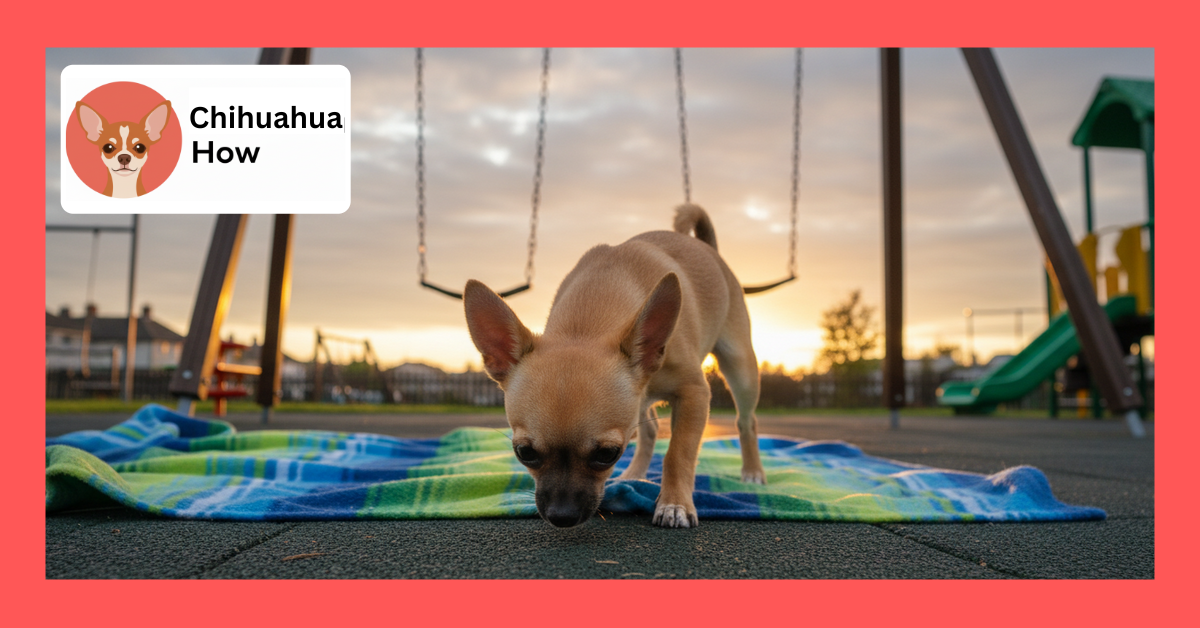
Generally, no. Chihuahuas have a strong prey drive and selective recall. Most are not reliably off-leash safe without extensive training. However, with consistent recall work started in puppyhood, many Chihuahuas can be trusted in enclosed spaces.
Most Chihuahuas are not reliably off-leash safe. Their prey drive is strong, their recall is selective, and their small size makes them hard to catch once they bolt. This guide explains what it actually takes to build safe off-leash behavior in this breed.
Are Chihuahuas good off-leash? While possible with extensive training, most Chihuahuas are not ideal candidates for off-leash activities due to their independent nature, high prey drive, and potential safety risks. Success requires breed-specific training protocols, controlled environments, and realistic expectations.
The growing trend toward off-leash dog experiences has many Chihuahua owners wondering if their pint-sized companions can safely enjoy unleashed freedom. According to recent research from the WagBar canine development study, off-leash activities provide significant benefits for dogs, including improved confidence and natural communication skills. However, small breeds like Chihuahuas present unique challenges that require careful consideration.
Understanding Chihuahua Temperament for Off-Leash Training
Chihuahuas possess distinct behavioral traits that significantly impact their off-leash potential. Their intelligence makes them trainable, but their independent streak and territorial instincts create complications compared to more biddable breeds.
No-Pull Harness for Chihuahuas
Chihuahuas have delicate tracheas. A harness distributes pressure safely across the chest instead of the neck.
These tiny dogs often exhibit strong prey drive, making them likely to chase small animals, leaves, or even shadows. Their natural suspicion of strangers and larger dogs can trigger defensive reactions that override recall training.
Additionally, Chihuahuas have a tendency toward what experts call “small dog syndrome” – compensating for their size with bold, sometimes reckless behavior. This can manifest as running toward potential threats rather than returning to their owner when called.
Key Behavioral Challenges
- Selective hearing: Chihuahuas may ignore commands when something more interesting captures their attention
- Fear-based reactions: Sudden noises or movements can trigger flight responses
- Resource guarding: Territorial behavior around toys, food, or favorite spots
- Overconfidence: Approaching larger dogs or dangerous situations without hesitation
The Science Behind Effective Chihuahua Training
Recent 2026 survey data reveals that rewards-based, non-aversive training methods prove most effective for all dog breeds, including Chihuahuas. This approach builds positive associations with recall commands rather than relying on fear or dominance.
The key lies in understanding that Chihuahuas respond better to motivation than coercion. Their strong food drive and desire for attention make treat-based training particularly successful when implemented consistently. For comprehensive training techniques, consider exploring scent tracking training methods that can enhance your dog’s focus and recall abilities.
Professional trainers emphasize that not all Chihuahuas will achieve reliable off-leash status. Genetics, early socialization, and individual temperament play crucial roles in determining success rates.
Training Success Factors
| Factor | High Success Indicators | Low Success Indicators |
|---|---|---|
| Age Started | Puppy (8-16 weeks) | Adult (2+ years) |
| Socialization Level | Extensive early exposure | Limited social experiences |
| Food Motivation | Highly treat motivated | Disinterested in rewards |
| Owner Consistency | Daily training sessions | Sporadic practice |
How to Train Your Chihuahua for Off-Leash Success
Successfully training a Chihuahua for off-leash reliability requires a progressive, patient approach. Most experts recommend a minimum six-month training period before attempting any off-leash experiences.
Step-by-Step Training Protocol
- Master basic commands: Ensure solid “sit,” “stay,” and “come” responses on-leash before progressing
- Long-line training: Practice recall using a 15-30 foot training line in secure areas
- Distraction proofing: Gradually introduce distractions while maintaining control
- Dragging leash phase: Allow supervised exploration with a lightweight leash dragging behind
- Controlled off-leash: Begin in fully enclosed, familiar environments
- Emergency recall: Develop a special command for urgent situations
Each phase should last 2-4 weeks, depending on your dog’s progress. Never rush the process, as setbacks can undo months of training. For new owners, understanding whether a Chihuahua is right for you can help set realistic expectations for the training journey ahead.
Essential Safety Equipment
Even well-trained Chihuahuas benefit from safety tools during off-leash activities. GPS collars provide real-time location tracking, while lightweight drag lines offer quick control access.
Emergency correction tools like water bottles or noise makers can redirect attention when treats fail to motivate. However, these should supplement, not replace, positive reinforcement methods.
Safe Off-Leash Environments for Chihuahuas
Location selection dramatically impacts off-leash success rates. Chihuahuas require more controlled environments than larger, more confident breeds.
Ideal locations include fully fenced dog parks with separate small dog areas, private yards with secure perimeters, and supervised training facilities. Avoid areas near busy roads, wildlife habitats, or spaces with aggressive dogs. Understanding Chihuahua aggression toward other dogs can help you select appropriate environments and manage social interactions safely.
Breakaway Collar for Chihuahuas (Adjustable)
Lightweight and safe for small necks. Sized specifically for toy breeds so it fits without slipping or choking.
Environmental Risk Assessment
- Traffic proximity: Maintain minimum 100-yard buffer from roads
- Other dogs: Ensure size-appropriate playmates and supervise all interactions
- Wildlife presence: Avoid areas with coyotes, birds of prey, or other predators
- Escape routes: Check for gaps in fencing or open gates
When Off-Leash Training Isn’t Recommended
Certain Chihuahuas should never be off-leash, regardless of training efforts. Dogs with high anxiety, aggressive tendencies, or poor health conditions face unnecessary risks in unleashed situations.
Senior Chihuahuas may lack the hearing or mobility needed for reliable recall. Similarly, dogs with vision problems cannot assess environmental dangers effectively.
Rescue dogs with unknown histories often struggle with off-leash training due to past traumas or lack of early socialization. These dogs may benefit more from secure, on-leash adventures.
Alternative Exercise Options
For Chihuahuas unsuited to off-leash activities, numerous alternatives provide exercise and mental stimulation. Long-line walks offer increased freedom while maintaining control. Indoor agility courses challenge both mind and body safely.
Interactive puzzle toys and supervised playdates with known dogs satisfy social needs without off-leash risks. Many Chihuahuas thrive with these modified approaches, including games like teaching your Chihuahua to play fetch in secure environments.
While some Chihuahuas can achieve off-leash reliability through dedicated training, most owners find greater success with controlled alternatives. The key lies in understanding your individual dog’s capabilities and prioritizing safety over complete freedom. Remember that a happy, secure dog on a long line often enjoys more genuine freedom than an anxious dog struggling with off-leash expectations.
The Prey Drive Problem: What Triggers Chihuahuas to Bolt
The core reason most Chihuahuas cannot be trusted off-leash is prey drive, not stubbornness. Prey drive is a hardwired behavioral sequence: the dog spots a moving target (squirrel, bird, cyclist, another dog), enters a chase state, and loses the ability to respond to external commands. In this state, a Chihuahua’s recall simply does not function. They are not ignoring you. The neural pathway that processes recall commands is temporarily suppressed by the chase impulse.
Chihuahuas were not originally bred as hunting dogs, but they retain the alert-and-chase instinct that all dogs carry to varying degrees. For Chihuahuas, the trigger is most commonly small moving animals, running children, and cyclists or joggers passing at speed. Understanding what specifically triggers your dog is the first step, because off-leash training is fundamentally about building recall strong enough to interrupt prey drive before the dog reaches full chase mode.
The practical implication: off-leash safety is not a binary yes or no. A Chihuahua may be reliably off-leash in a fenced backyard, moderately reliable in a quiet park, and completely unreliable near a jogging path. Knowing your dog’s specific triggers allows you to calibrate where off-leash time is appropriate rather than writing it off entirely.
Building Reliable Recall from Zero: A Step-by-Step Protocol
Recall training for Chihuahuas requires more repetitions than most owners expect, because you are training against a competing drive. The following protocol is designed for dogs with no existing recall or dogs whose recall has broken down. Work through each step before moving to the next.
Step 1: Charge the recall word (Week 1). Choose a recall word you will never use for anything else. “Come” is acceptable but gets contaminated if used casually. “Here” or a specific name said in a distinct tone works better. Say the word once and immediately give a high-value treat (chicken, cheese, hot dog). Repeat 20 times per day. The dog is learning that this sound predicts something excellent, not that they need to do anything yet.
Step 2: Add distance in a confined space (Week 2). In a small room, say the recall word once, then crouch down and hold the treat out. When your Chihuahua reaches you, give the treat and make it a celebration. Never repeat the recall word if they do not respond immediately. Call once, wait 5 seconds, then reset. Repetition on no-response teaches them the word is optional.
Step 3: Add mild distraction (Week 3 to 4). Practice in the backyard with a long line (5 to 7 meters) attached to a harness. Begin with zero distractions, then add mild ones: practice while another family member is outside, while a toy is on the ground nearby. Always reward with the highest-value treat you have.
Step 4: Test under real conditions (Month 2 onward). A Chihuahua is not off-leash reliable until they respond to recall in the presence of their specific trigger at least 9 out of 10 times over multiple sessions. Test in controlled conditions before removing the long line in open spaces. Most Chihuahuas reach this level with 4 to 8 weeks of daily 10-minute sessions.
Frequently Asked Questions
Can all Chihuahuas be trained for off-leash activities?
No, not all Chihuahuas are suitable for off-leash training. Success depends on individual temperament, early socialization, age when training begins, and genetic factors. Dogs with high anxiety, aggression, or poor recall abilities may never achieve reliable off-leash status regardless of training efforts.
How long does it take to train a Chihuahua for off-leash reliability?
Most experts recommend a minimum of six months of consistent, progressive training before attempting off-leash activities. Some Chihuahuas may require 12-18 months or more, depending on their starting skill level, age, and individual learning pace.
What are the biggest safety risks for off-leash Chihuahuas?
Primary risks include traffic accidents, attacks by larger dogs or wildlife, getting lost due to poor recall, and injury from falls or rough play. Chihuahuas are particularly vulnerable due to their small size and sometimes overconfident nature.
Are there specific environments where Chihuahuas should never be off-leash?
Avoid off-leash activities near busy roads, in unfenced areas, around aggressive dogs, or in locations with wildlife predators. Also avoid crowded public spaces where your dog might become overwhelmed or lost in the chaos.
What equipment helps keep off-leash Chihuahuas safe?
Essential safety equipment includes GPS tracking collars, lightweight drag lines for quick control, high-value treats for emergency recall, and noise makers for redirecting attention. A properly fitted harness prevents neck injury if quick corrections become necessary.
How do I know if my Chihuahua is ready for off-leash training?
Your dog should demonstrate consistent on-leash recall, basic obedience skills, appropriate social behavior with other dogs, and strong food or toy motivation. They should also show confidence rather than fearfulness in new environments.
What should I do if my Chihuahua runs away during off-leash time?
Never chase your dog, as this often triggers their prey drive to run faster. Instead, call their name calmly, use your emergency recall command, or try running in the opposite direction to encourage them to follow. High-value treats or favorite toys can also help lure them back safely.
About the Author
Dane G. is a Chihuahua owner and enthusiast who writes about the breed’s unique needs, personality, and care requirements. All advice is based on personal experience and research from veterinary and breed-specific sources.